
Locate the evidence.
Which component is this? E-014 records a dated observation at EF-04-W12. E-015 adds a later view of the same joint.
LUMETRA / LAYER 1
Give building information a shared foundation. The same building and component identities connect locations, evidence and history across professional work.
Foundation in development
Organize portfolios, buildings, systems, assets, and components around shared identities.
Describe the systems and assemblies that make up each building.
Place components and observations at the relevant building, floor, area, or façade.
Link photos, observations, and supporting documents to the relevant location or component.
Follow observations, assessments, and documented changes over time.
Connect components, evidence, findings, and follow-up through shared building records.
DIGITAL TWIN / FICTIONAL PHYSICAL REFERENCE
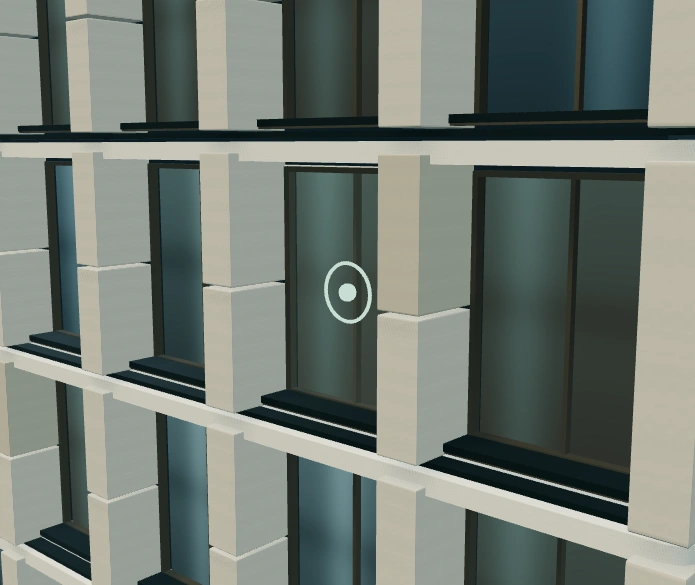
Physical, evidence and assessment views reference the same component. This is a fictional website illustration; it does not read or save application data.
SOURCE / DATE / REVIEW CONTEXT
Planned connection: reviewed intervention → capital-plan discussion. A different source and review remain necessary; no plan is automatically amended.
FICTIONAL RECORD / BEFORE & AFTER THE REVISIT
Fictional website comparison. Selection changes this illustration only; issued records are not edited and no report is released here.
In Lumetra’s intended architecture, the Digital Twin is a structured representation of a building and its related information: hierarchy, systems, component identity, evidence, assessment references and changes over time.
A 3D model can be one way to explore that information. It does not make the record complete. Real-time sensors and 3D geometry are not prerequisites for every twin, and are not promised here.
One physical component. Stable identity should connect records across assessments; matching a name alone is not enough.
Source ownership stays clear. A Twin view does not replace an assessment, invent a universal condition score or silently amend an approved capital plan.
History adds, rather than overwrites. Reassessment preserves prior evidence, professional conclusions and issued versions.
Shared foundation in development. Complete cross-discipline linkage is not yet a released capability. The example below is conceptual, not operational product proof.
A Digital Twin is more than a 3D view. The useful connection is between a building, a physical component and what people record, interpret and review over time.
Weathering at the joint.
An observation, before an interpretation.
E-014 / SOURCE OBSERVATION
Localized weathering is recorded at the east-façade window joint. A dated illustrated evidence reference stays linked to component EF-04-W12.
Localized weathering is recorded at the east-façade window joint. A dated illustrated evidence reference stays linked to component EF-04-W12.
E-014 · Illustrated photo reference P-014
A separately authored finding references E-014. The reviewer asks whether the source supports the proposed interpretation. The original observation is preserved.
F-008 → E-014 · Working revision 02
A later fictional site visit records the same joint again. It creates a new dated observation for the same component; it does not overwrite E-014 or automatically change an earlier report.
E-015 + E-014 · Same component identity
The intended connection would let an envelope finding inform an intervention and a capital-plan review. Matching names alone do not establish asset identity. Changes need their own review; no plan is amended automatically.
Envelope → intervention → capital review
Intelligence begins with knowing what information means, where it came from and who reviewed it. It supports professional decisions; it does not replace them.
Which component is this? E-014 records a dated observation at EF-04-W12. E-015 adds a later view of the same joint.
F-008 refers back to its source. A review question, assumptions and any differing professional findings retain their own authorship.
Reviewed records can frame intervention and planning discussions. Cross-module scenarios, portfolio analytics and predictive methods remain planned.
Future question: “Which components warrant closer review, and what would different intervention priorities mean?” This is a platform direction, not a live calculation or an autonomous recommendation.